What is Stress?
What is Stress?
Stress is the body and mind's automatic response to any demand, pressure, or sudden change. It triggers physical and mental adjustments to help you face challenges, but too much of it can cause harm.
Stress can appear in our lives as
Work stress;
meeting deadlines,
working with difficult colleagues,
navigating procedures and policies
Educational stress - we often nromalise this as we are used to working hard to get our assignments done, but this can elevate your stress hormones and create a negative stress response in your nervous system which can affect your overall wellbeing
or even traffic to get to the office, or public transport can add stress to our systems
Relationship Stress;
Constantly walking on eggshells around people that we know react poorly to our ideas, visions, voice and opinions
Keeping ourselves safe from harm
Finding appropriate communication styles in relationships in school, work, public spaces or even with our family members
Dietary Stress;
We are all individuals and are made up of different genetics and biochemistry, so we may react to some foods and nto others
Foods today can create stress on our digestive systems, vascular system, detoxification system and of course our nervous system
Many foods (even the healthy ones) are often sprayed with harmful chemicals that create stress in your body at the cellular level, which can have a greater impact on your brain chemicals, your nervous system and hormones. If these are affected you can ‘feel’ the stress as an emotional byproduct of the internal reactivity and stress
Processed foods are often laiden with flavours, numbers and chemicals to help keep their shelf life and keep you addicted to them; this can create addictions and act on the stress points mentioned above in the gut, brain and nervous system.
Biochemical stress;
Our Shampoos, Moisturises, soaps, sanitary products are all laden with chemicals to help keep the products shelf stable and smelling nice, but these chemicals create stress on our endocrine system and can affect the way we make and utilise our hormones. This in turn affects our nervous system and ho we feel internally. Having stressed metabolic or hormonal systems affects the way we feel - so sometimes we don’t ‘feel’ stressed but our bodies are indeed coping with a lot of external and internal stress
Can Stress be good for me?
Yes it can!
Some stresses help us grow!!
Experiencing stress is a part of life and if experienced in small amounts with periods for rest in between this can help to increase our level of alertness, energy and resilience, however prolonged stress can hold a negative impact if it overwhelms our normal coping mechanisms and creates negative effects
The graph below demonstrates the differences between “healthy tension” pushing us towards peak performance and the negative aspect where overwhelm can be experienced.
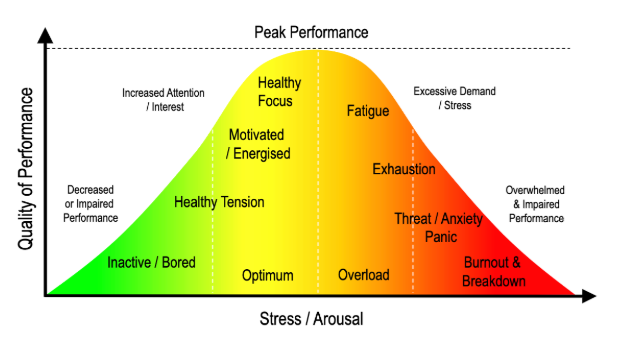
Yerkes-Dodson Stress-Performance Curve (image)
Sometimes what begins as healthy stress lasts long enough to become unhealthy stress; this is the type of stress that sometimes we do not notice until our body starts to tell us through symptoms such as fatigue, brain fog, or altered hormonal patterns that indicate we are overwhelmed with the level of stress in our lives
What can you do to minimize stress?
Meditation;
Meditation is a mind-body practice which can differ for everyone. It can include breathing techniques, mantras, guided meditations, body scans, and calming our mind through being in nature
Mindfulness;
This can be similar to meditation; however, it focuses your mind and awareness on the present moment without judgement.
Noticing your present thoughts, feelings, and sensations within the body can help you identify areas of tension or areas of ease
Exercise;
Movement keeps us healthy and has been shown to reduce stress on our bodies through regulation of certain hormonal pathways and regulation of chemicals like cortisol
It is important to find the right level of exercise that is specific to you and your body type, as some exercise regimes may be stress-reducing for one person, but could increase stress for another. You can work with your Naturopath to find the right level for you.
Healthy Eating;
Eating organically can reduce the amount of chemical stress within the body by way of reducing our exposure to chemicals like glyphosate, which is often sprayed on non organic foods crops and has been shown to disrupt the bodi’s normal healthy processes
Eating the rainbow and getting plenty of fruit and vegetables helps reduce dietary stress by giving our bodies the micro and macro nutrients it needs to maintain healthy cellular function and create energy
Healthy relationships;
Finding ways to communicate without harming those around us and having our own voices heard in times when we need to express our visions, ideas and opinions.
Try to surround yourself with people who support you, but who can healthily challenge you (see chart above) to find the best, “peak” version of ourselves.
Remove yourself from relationships that bring you harm and seek support from people who are safe and can provide adequate referral or support
Reducing toxins;
By reducing our exposure to toxins in our self-care products and household cleaning products we can reduce the biochemical stress on our bodies, which will have a flow-on effect to our hormonal system and nervous system.
As you know - everything is connected!
So when one area of your life trends towards negative stress and overwhelm, the systems within your body are always responding. Your flight and fight system of your nervous system activates and sends chemicals throughout your body to keep you safe. Over time this can become dysregulation, because as our stress hormones elevate, we can send signals to shut down other systems like our digestive system or our fertility system….. We do this because our body is trying to conserve energy to adjust to or respond to the threat which has been detected as stress.
In the case of biochemical stress, this can put added pressure on our detoxification pathways and burden important systems like our digestive tract and our liver and kidneys, which are responsible for first-line detoxification channels. When these systems become fatigued from prolonged stress or burden, we can sometimes see an exacerbation of symptoms through other systems like our hormonal, skin, and lymphatic systems.
Stress can show up in many ways, and regular meditation and mindfulness practices help us to detect early signs of stress and to help regulate our bodies and minds to find the balance it is always seeking.
Working with a Naturopath who is trained in mental health, stress, anxiety, and trauma can help you keep on track to reach your goals and maintain healthy stress responses as life continues to grow and change.